Cigar 101
What we tell first-timers at the counter
Sizes, wrappers, strength, how to cut and light, and how to keep cigars at home, in the order people usually ask. No snobbery and no wrong answers.
Sizes
A cigar size chart, drawn to scale
Every size is called a vitola. The first number is length in inches; the second is the ring gauge, the width in sixty-fourths of an inch. Longer means more time. A bigger ring smokes cooler and slower.
Petit corona
4½ × 42 inches by ring gauge
About 30 minutes
A coffee-break cigar.
Corona
5½ × 42 inches by ring gauge
About 45 minutes
The classic, balanced shape.
Robusto
5 × 50 inches by ring gauge
About 50 minutes
The most popular size in the shop.
Toro
6 × 52 inches by ring gauge
About 70 minutes
A robusto with an extra inch to settle in.
Belicoso
6⅛ × 52 inches by ring gauge
About 70 minutes
Tapered head that focuses the smoke.
Churchill
7 × 48 inches by ring gauge
About 90 minutes
Long and elegant, for a slow evening.
Lancero
7½ × 38 inches by ring gauge
About 75 minutes
Long and thin, all wrapper and flavor.
Gordo
6 × 60 inches by ring gauge
About 90 minutes
Big ring, cool and slow.
Wrappers
From claro to oscuro, and why color is not strength
The wrapper is the outside leaf, and it carries much of the flavor. Darker wrappers have been fermented longer and usually taste sweeter, but strength comes from the filler inside. A dark cigar can be mild, and a pale one can surprise you.
Claro
Pale tan, often shade-grown. Creamy, nutty, gentle.
Natural
Light brown. Cedar, hay, a little sweetness.
Colorado
Reddish brown. Spice, cedar, and a little bite.
Colorado maduro
Dark reddish brown. Cocoa, coffee, and warm spice.
Maduro
Dark and oily. Sweet: chocolate, molasses, fig.
Oscuro
Nearly black. Earth, espresso, black pepper.
Strength
Strength is the nicotine. Body is the flavor.
Strength is how hard a cigar hits you; body is how rich and full it tastes. New smokers should start mild to medium and eat something first. A sip of something sweet helps if a cigar gets to you.
MildFor example, the Morning Shade Corona
Mild to mediumFor example, the Clásico Churchill
MediumFor example, the House Reserve Robusto
Medium to fullFor example, the House Maduro Belicoso
FullFor example, the Estelí Oscuro Toro
Cut and light
How to cut and light a cigar
Ask at the counter and we will cut and light your first one for you. Here is what we do.
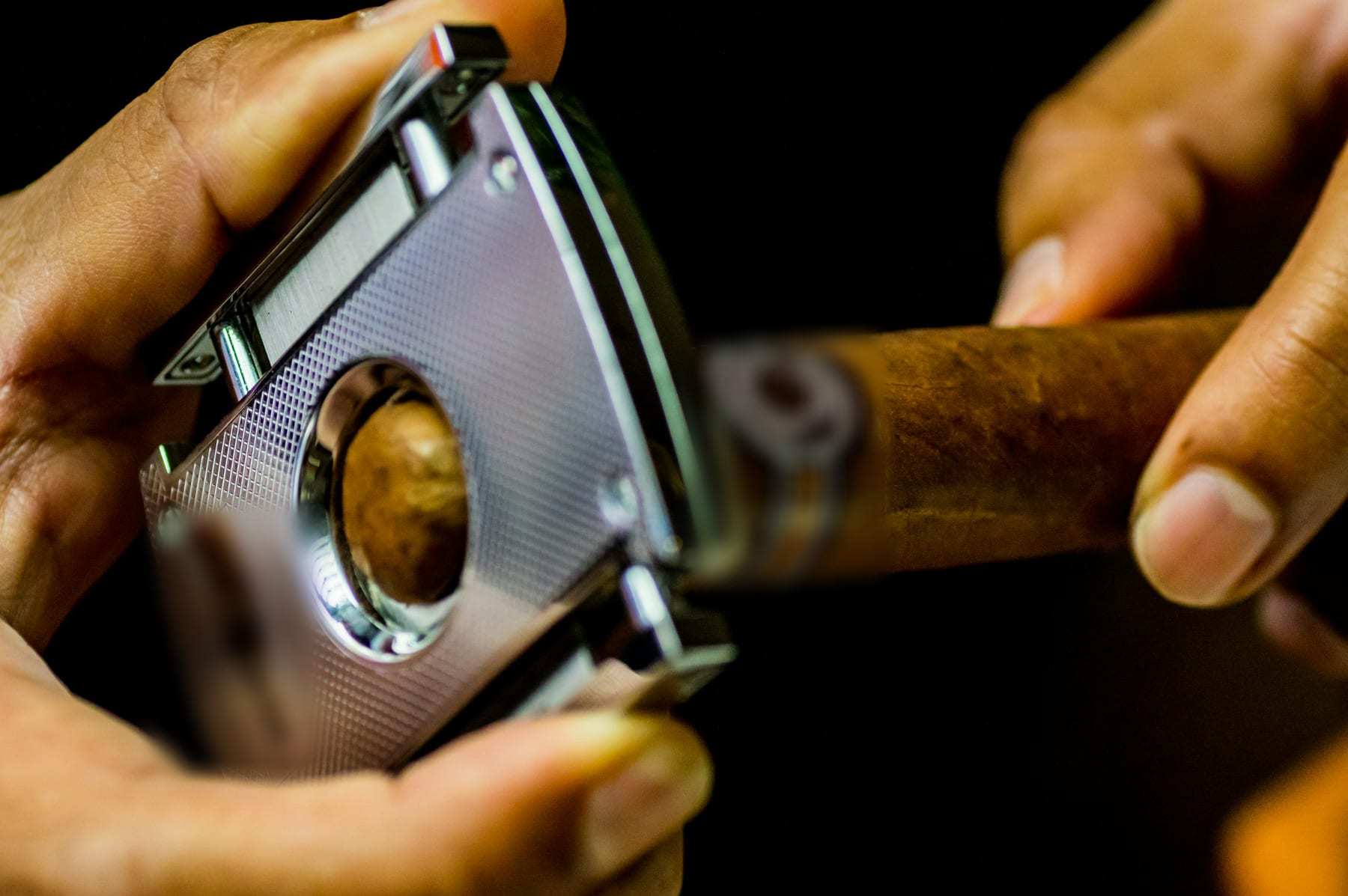
Three ways to cut
- Straight cut. A guillotine cutter takes the cap off in one clean snip. Cut just above where the cap meets the wrapper, about a sixteenth of an inch. Works on everything.
- Punch. A round punch opens a small hole in the cap. A cooler, more focused draw, best on thick ring gauges. Not for a pointed belicoso.
- V-cut. A wedge notch across the cap. More surface than a punch, less than a straight cut. Good on robustos and toros.
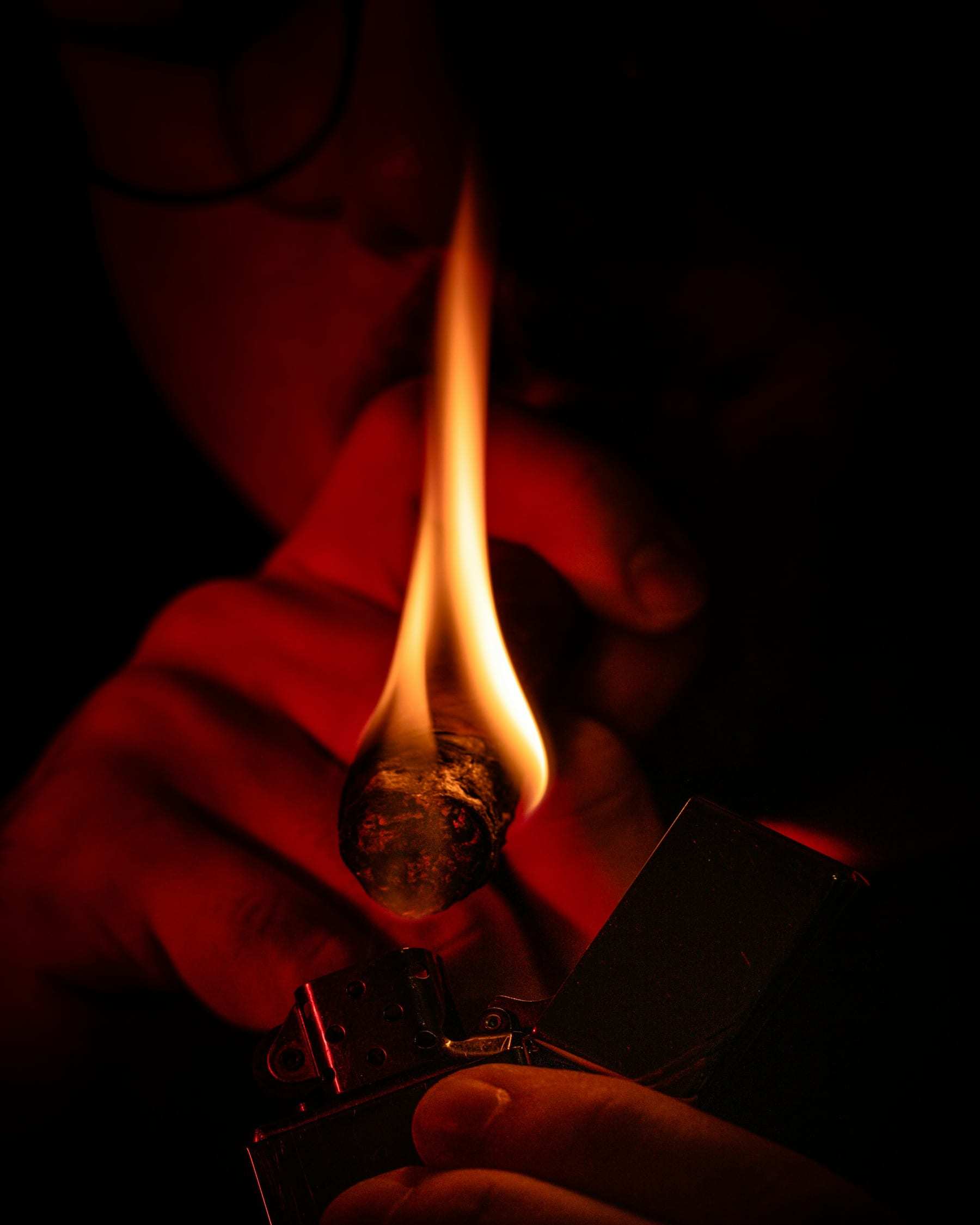
Lighting and smoking
- Toast the foot. Hold the flame just under the foot, not in it, and turn the cigar until the whole end glows evenly. A soft torch or a cedar spill is best; skip the gas station lighter.
- Draw gently. Bring it to your lips and take slow puffs while you turn it. Do not inhale. Cigar smoke is for tasting, not for your lungs.
- Slow down. About one puff a minute keeps it cool. Smoking fast makes any cigar bitter.
- Let the ash be. A firm inch of ash keeps the burn cool and even. Roll it off on the ashtray edge rather than tapping.
- Let it go out. When you are done, rest it in the ashtray and it goes out on its own. No need to stub it.
At home
Keeping cigars at home
- Keep them between 65 and 70 percent humidity and 65 and 70 degrees. Too dry and they crack and burn hot; too wet and they will not stay lit.
- For a few weeks, a sealed food container with a two-way humidity pack is all you need.
- A new wooden humidor needs seasoning first: wipe the cedar with distilled water and let it sit closed with a humidity pack for a few days before cigars go in.
- Never use tap water, and keep the box out of the sun and away from the heater.
- Bring your hygrometer in and we will check it against ours for free.
In the lounge
Lounge manners, the short version
- Take the band off once the cigar has warmed up, or leave it on. Nobody minds.
- Ask before you sit down in someone's group, and anyone will hand you a cutter if you ask.
- Bringing your own cigar is fine. Pay the cut fee at the counter, or become a member.
- The main room is the quiet room. Phone calls and the game go in the side room.
Learn it in person: Cigar 101 night
An hour with a tobacconist, two cigars to try, and six seats. Check the calendar for the next one, or just come in and ask.